
Voievodul Vlad Țepeș (Drăculea)
Comte des Carpates
This page is dedicated to the identity of Voivode Vlad Țepeș, the figure who inspires the Comte des Carpates concept— an emblematic Face, a major historical symbol that irrevocably shaped a chapter of Time in the history of Christendom.
The concept of the “Face”
In the Orex® concept, the “face” represents a remarkable personal identity that left a strong imprint on universality.
The connection with design
Comte des Carpates brings together essential insignia associated with the face of the evoked personality and its historical era, expressed through discreet elements and representative symbols of: immateriality (legend/reality), materiality (metal/glass), contrast (controlled light), and symmetry (clean-cut details). < /p>
Transylvania – “Suisse des Carpates”
Medieval Transylvania, often evoked today as the “Suisse des Carpates”, is a mystical land of the Carpathian Mountains—a territory of striking landscapes, fortified cities, local autonomy, and rigorous organization; a culture of order and resilience at the frontier between worlds, the Christian world and the pagan world.
Vlad’s childhood
Vlad was born in 1431 in Sighișoara, Transylvania, where he spent the first years of his childhood. At the age of 11, he was taken as a hostage by the Ottomans together with his brother Radu, after Vlad Dracul—placed on the throne by Sigismund of Luxembourg—submitted to the Sultan. The six years spent as a hostage left a deep mark on him, as Vlad belonged to the Central European sphere, itself multicultural, yet governed by an order very different from that of the Ottoman world.
Genealogical lineage
His father was Vlad known as Dracul, so called because he was a member of the Order of the Dragon. A member of the Drăculești dynasty, Vlad was also the grandson of the great Voivode Mircea the Elder. For a clearer understanding of Vlad’s genealogy, it is worth noting that Charles, then Prince of Wales, stated that he is related to the Romanian ruler. According to genealogical research, Queen Elizabeth II’s grandmother descended from the Drăculești line—more precisely from Vlad III the Monk, the half-brother of Vlad Țepeș.
The education of the young Vlad
As a member of the royal Drăculești dynasty, the young Vlad received a refined education from Romanian and Greek scholars, including studies in Constantinople. He thus acquired both military skills and knowledge in geography, exact sciences, and the arts, as well as remarkable linguistic abilities, speaking fluently—besides his native Romanian—several foreign languages: Old Church Slavonic, German, Turkish, and Latin.
Vlad’s marriages and descendants
Vlad was married three times: first to a Transylvanian noblewoman, Cneajna Báthory, then to Jusztina Szilágyi, and finally to Ilona Nelipic, a cousin of King Matthias Corvinus. From these three marriages he had five children—four sons and one daughter: Radu and Vlad from the first marriage, Mihail and Mihnea the Bad from the second, and Zaleska from the third marriage.
The Order of the Dragon
The Order of the Dragon, similar to the Order of the Knights of Malta or the Teutonic Knights, was an elite military-religious society, founded in 1387 by Sigismund of Luxembourg, King of Hungary (later Emperor of the Holy Roman Empire), together with his second wife, Barbara of Cilli. The symbol of the Order was a coiled dragon and a cross, and its purpose was the defense of Christianity against the expansion of the powerful Ottoman Empire.
The struggle for the throne of Wallachia
In 1447, Vlad Dracul—father of Vlad Drăculea and ruler of Wallachia—was assassinated together with his son Mircea, bringing the Drăculești rule to an abrupt end. Vladislav II ascended the throne in December 1447 with the support of John Hunyadi. Vlad Drăculea, son of Vlad Dracul, attempted to seize the throne in 1448 with Ottoman backing, while Vladislav II was fighting at the Battle of Kosovo alongside John Hunyadi. The attempt proved short-lived, as Vlad was quickly driven out by Vladislav, who enjoyed Hunyadi’s support. After the fall of Constantinople in 1453, relations between John Hunyadi and Vladislav II deteriorated, and the balance of power shifted.
Vlad Drăculea’s second enthronement as Voivode
In the spring of 1456, Vladislav II entered Transylvania and devastated all the Saxon villages south of Făgăraș. With the support of John Hunyadi, the young Vlad of the Drăculești lineage launched a military campaign in the summer of 1456 and, driven by a desire for revenge and power, killed Vladislav II. Vlad Drăculea ascended the throne of Wallachia in 1456, during a difficult period in Romanian history, when corruption was widespread throughout the country, affecting the economy and internal political stability. At the same time, the Ottoman Empire was in full expansion, threatening trade routes and the stability of Europe from the southeast.
Vlad Drăculea — a remarkable voivode and a fierce defender of Christianity
Once he became ruler, Vlad Drăculea refused to submit to the Ottoman Empire, seeking to preserve the independence of his country. This decision radically changed the attitude of Sultan Mehmed II, who in 1462 sent a massive army with the aim of conquering the territory ruled by Vlad. The Romanian voivode crushed the Ottoman forces, the battle known as the “Night Attack” being his most significant military victory. The Greek historian Chalcondyles recorded that Vlad defeated “the greatest Turkish force assembled since the conquest of Constantinople.”
The transition from Vlad Drăculea to Vlad Țepeș
Before assuming the throne, Vlad Drăculea spent much of his life outside the country, a fact that may explain his later domestic policy. Vlad Țepeș chose an authoritarian form of rule, in which the position of the voivode prevailed over that of the boyars. He did not hesitate to punish traitors, including members of the ruling family, in order to eliminate the risk of a partisan nucleus forming around a rival claimant. Any suspicion of treason quickly led to accusation and punishment—most often by impalement and the confiscation of property.
The final reign of Vlad Țepeș
Accused of treason, the voivode was arrested and imprisoned for nearly twelve years at Visegrád by the Hungarian king Matthias Corvinus. After his release in 1474, Vlad Țepeș led several Hungarian military campaigns in Bosnia against the Ottomans. In 1476, in the context of the wars against the Turks led by Stephen the Great—who had by then also become a vassal of King Matthias Corvinus— Vlad Țepeș once again became ruler, though only for a short time. He did not enjoy the support of the boyars, who had not forgotten his authoritarian rule, and, according to foreign chroniclers, he was ultimately slain even by his own sons.
Dracula — the Count of the Carpathians
Vlad Țepeș entered legend during his own lifetime. Numerous German and Slavic tales exist, as well as Romanian legends, some sharing motifs associated with strigoi. German accounts emphasized the ruler’s cruelty. Historians argue that these stories were deliberately spread by the Saxons and by Matthias Corvinus in order to justify, before the Pope, Vlad’s arrest and the halt of the anti-Ottoman crusade. His name was known from east to west, becoming the subject of frightening tales even while he was alive. His fame was later universalized at the end of the 19th century by Bram Stoker’s novel *Dracula*, and subsequently by cinema.
Historical representations
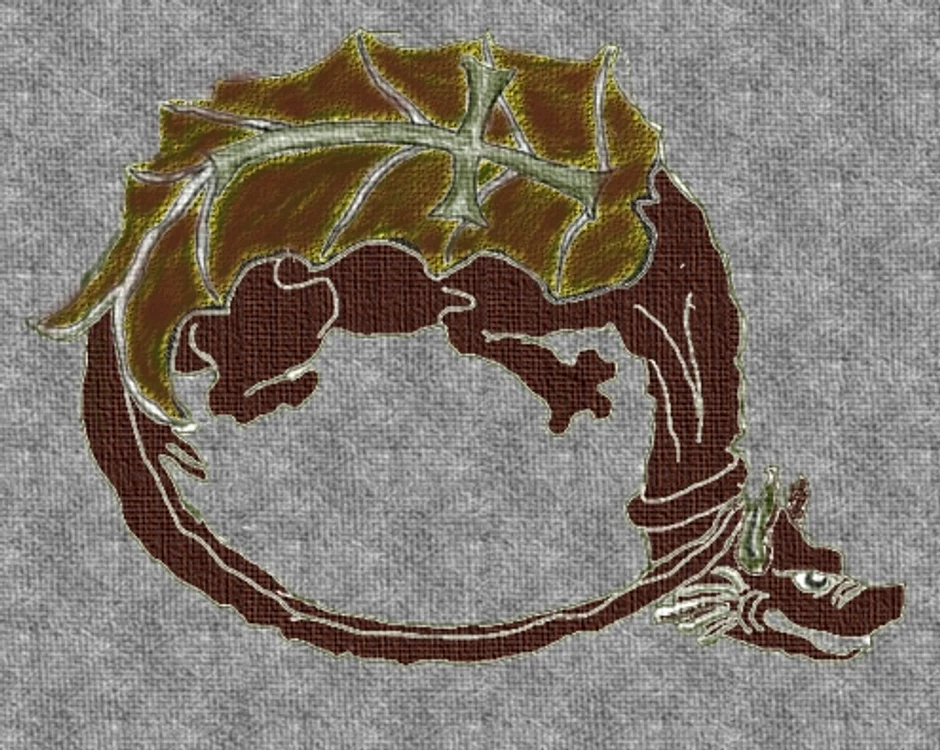


- 📎 Collection name
- “Comte des Carpates”
- 🗓 Appearance
- 2025-2026
- 🏷 Symbolism
- Historical face / symbolic inspiration. For Orex®, Drăculea embodies not merely a myth or a legend, but a signature of character: order, rigor, clarity, and responsibility; and, in horological language: clean proportions, noble materials, discreet details, and time treated as discipline.
- 🕰 Distinctive features
- The emblem of the coiled Dragon Order—of flight and time; the eight-pointed Solar Balance star with golden textures; the ruby of Power, fraternity, and knightly courage in deep red as medieval heraldic details; symmetrical lines inspired by the seven towers of the Sighișoara fortress and the spires of Christian churches; dial colors rendered in the deep, noble tones of the great voivode.
- Historia.ro – Vlad Țepeș: legendă și istorie
- Radu Florescu, Raymond McNally – Dracula: Prince of Many Faces
- Constantin Rezachevici – Studii privind domnia lui Vlad Țepeș
- Academia Română – Documente medievale românești